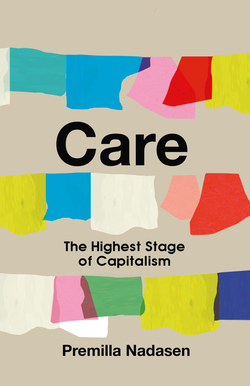
Today, discussions of care are ubiquitous. From employer-programs promoting self-care to the $800 billion healthcare industry, care forms a central part of our lives and the economy. But, are the systems and structures currently in place to care serving those who need it the most? This episode, featuring historian and activist Premilla Nadasen, takes a close look at the care economy and its relationship to racial capitalism and the reconfiguration of the welfare state. Along the way, we talk about the rise of the care-industrial-complex, wherein private corporations and non-profits benefit from public investment in care; what it’s like for those who work in the care industry; and what a caring society built on radical care, as opposed to care-for-profit, might look like.
Check out the episode here!
Premilla Nadasen is a Professor of History at Barnard College, Columbia University. She served as president of the National Women’s Studies Association (2018-2020) and is currently co-Director of the Barnard Center for Research on Women. Born in South Africa, Nadasen has been involved in social justice organizing for many decades and published extensively on the multiple meanings of feminism, alternative labor movements, and grass-roots community organizing. Among her many awards and fellowships are the Fulbright Visiting Professorship, the John Hope Franklin Prize, and the inaugural Ann Snitow Prize for feminist intellectual and social justice activism. Her books include Care: The Highest Stage of Capitalism and Welfare Warriors: The Welfare Rights Movement in the United States and Household Workers Unite: The Untold Story of African American Women Who Built a Movement.
 Who Makes Cents