
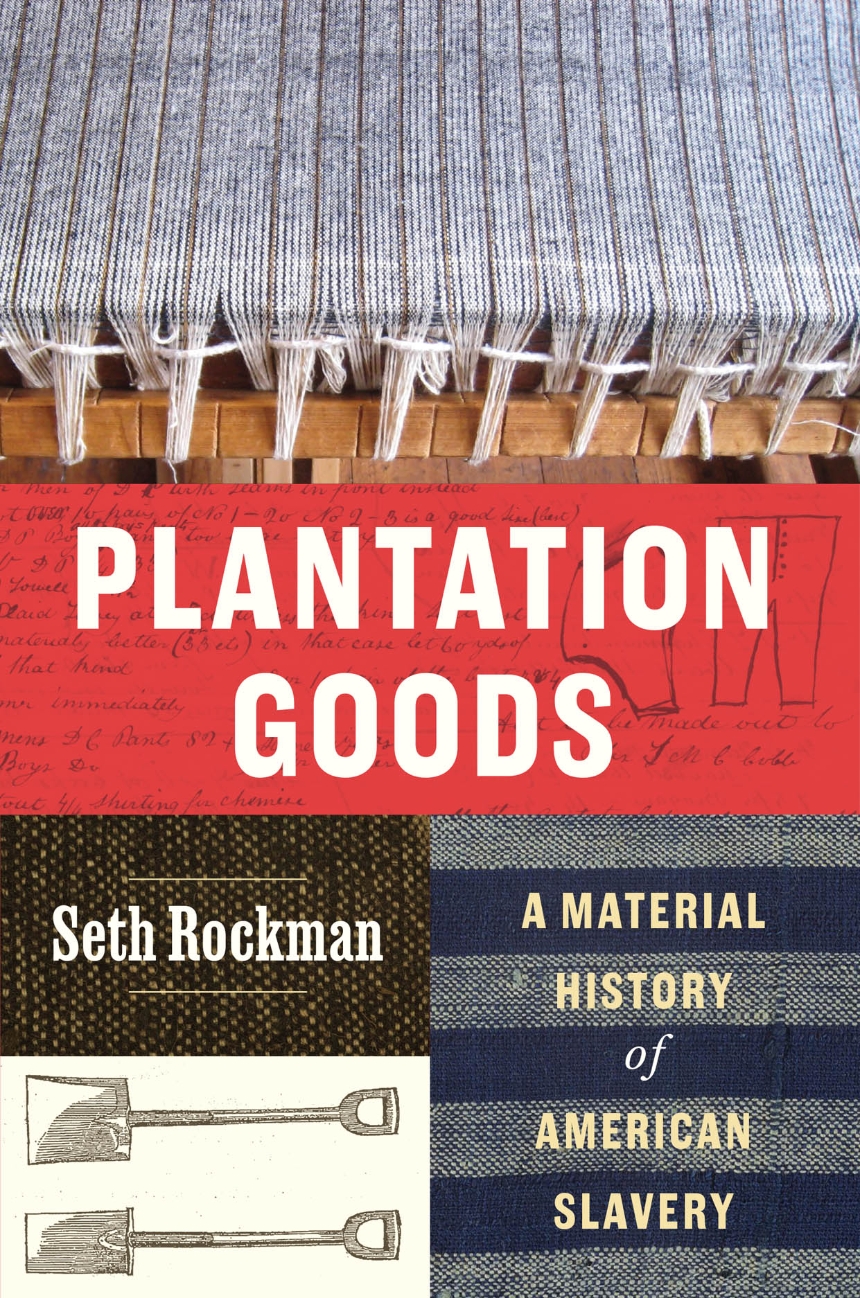
A simple leather shoe. A scratchy shirt made of cotton or wool. A roughly-hewn axe. A leather whip, braided in New Jersey. Southern slavery did not just depend on an extractive economic system, or a highly-unequal racial and social order, or a brutal regime of labor exploitation—even though it needed all of those things. It also required a vast array of goods: real, tangible tools and garments that were usually made in the North and used in the South.
Seth Rockman’s new book, Plantation Goods: A Material History of American Slavery, follows those everyday objects: from their production, to their sale, to their distribution and use on plantations. Along the way, he reveals the economic and imaginative ties that linked people living across antebellum America—North and South. And he explains how those plantation goods could become sites of struggle, as slaves used them to contest the terms of their bondage.
Check out the episode here!
Seth Rockman is a historian of the United States focusing on the period between the American Revolution and the Civil War. His research unfolds at the intersection of slavery studies, labor history, material culture studies, and the history of capitalism. Rockman’s earlier work— the award-winning Scraping By: Wage Labor, Slavery, and Survival in Early Baltimore (2009) and the co-edited volume Slavery’s Capitalism: A New History of American Economic Development (2016)— sought to better understand the relationship of slavery and capitalism in the American past. In December 2022, Rockman shared his research findings with the US House Financial Services Committee in live testimony. Rockman’s newest book, Plantation Goods: A Material History of American Slavery, was published by University of Chicago Press in Fall 2024.
 Who Makes Cents